You did a great deal. You worked, you chose, you committed, you built. And now, looking back, you do not know if it was right. The hidden truth about this uncertainty is not that you lack information — it is that the question itself is unanswerable in the way you are asking it.
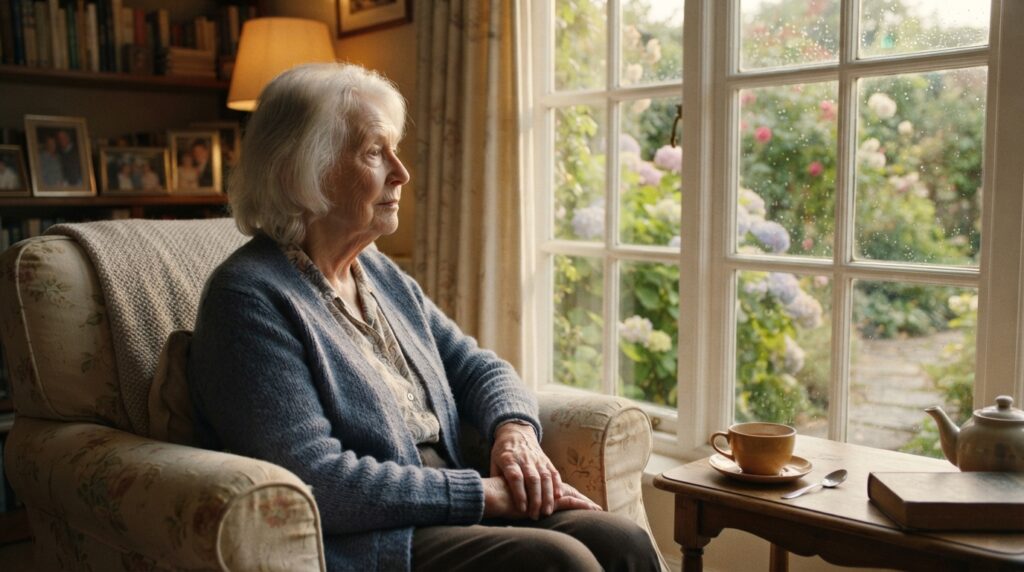
She had been a doctor for thirty-eight years.
By any external measure, a successful one — respected by colleagues, trusted by patients, a career built on genuine competence and genuine care. And yet, in her late sixties, she sat with a specific uncertainty that the success could not resolve: she did not know if it had been right.
Not whether the medicine had been practiced correctly. Whether the life had been organised correctly. Whether the choice — made at twenty-three, when medicine had seemed like the obvious right answer — had actually been right, or whether it had simply been the choice she made, which she had then spent thirty-eight years making right through the quality of the work.
“I can’t tell,” she said, “whether I chose correctly and then lived it well, or whether I lived it well and that made it seem like I had chosen correctly. Is there even a difference?”
The hidden truth about whether you did the right thing is that the question, in the form in which it is typically asked in later life, cannot be answered. Not because the information is unavailable, but because the frame of the question contains a structural error: it assumes that the “right thing” was a fixed standard that existed at the time of the choice, against which the choice can now be evaluated. This assumption is incorrect. The standard against which you are now evaluating your choices was not available when the choices were made — it was produced, in part, by the choices themselves and by the person who was formed through making them.
The Hindsight Problem — Why the Evaluation Is Always Unfair
The psychological literature on what researchers call hindsight bias — the tendency to believe, after an outcome is known, that one would have predicted it or that the correct choice was obvious in advance — documents one of the most consistent distortions in human judgment (Fischhoff, 1975). The person looking back at a decision from a position of knowing the outcome systematically overestimates how knowable the correct choice was at the time the decision was made.
In the context of the life review, hindsight bias operates in a specific way: the choices made decades ago are evaluated against a standard of what was “right” that incorporates information about what those choices produced — information that was not available when the choices were made. The person who chose medicine at twenty-three is now evaluated by a person in their late sixties who knows what medicine produced, what it cost, what other paths might have been taken. The evaluation is not a fair assessment of the original choice. It is an assessment of the original choice by a person who knows too much — who has access to outcomes that were, at the time of the choice, genuinely uncertain.
The retrospective guilt about choices made decades ago is structurally unfair — not because the choices were necessarily right, but because they are being evaluated by a person who has information that the person who made the choices did not have and could not have had. Holding the person you were to the standard of the person you have become is not honest accounting. It is a category error.
Kahneman’s distinction between the experiencing self and the remembering self is relevant here: the self that lives through experiences and the self that evaluates them in retrospect are not the same self, and their assessments of the same events differ systematically (Kahneman, 2011). The remembering self evaluates the career through the lens of everything that followed — the relationships strained, the paths not taken, the costs that accumulated over thirty-eight years. The experiencing self who made the choice at twenty-three had access to none of this. Evaluating the choice from the remembering self’s position as if it were available to the experiencing self is the structural error that produces the retrospective guilt.
How the “Right Thing” Changes as the Person Changes
The deeper problem with the question of whether you did the right thing is the word “right.” What counts as right depends on what is valued — and what is valued changes as the person develops. The twenty-three-year-old who chose medicine valued competence, contribution, the application of intelligence to problems that mattered. The sixty-eight-year-old who is now evaluating that choice may value those things less centrally and other things — connection, presence, the experiences that competence and contribution were not organized around — more centrally.
The choice was right by the values of the person who made it. It is being evaluated by the values of a person who has been changed by the experience of living that choice — and who therefore values things differently than the person who made it. This is not a failure of the original choice. It is the normal consequence of development: the self that lives through a set of choices is formed by those choices and arrives at different values than the self that made them. The retrospective sense that the choice was wrong is often the sense that the person the choice produced would have chosen differently — not evidence that the original choice was wrong, but evidence that the person has developed.
Research on what psychologists call value change over the lifespan has found that people’s values shift consistently in predictable directions across adulthood — typically from achievement-oriented and individualistic values in early and middle adulthood toward relationship-oriented and meaning-focused values in later adulthood (Carstensen, 2006). The person in later life who evaluates earlier achievement-oriented choices by their current relationship-oriented values is evaluating the choices made by a different value system against the standards of the current one — and producing, inevitably, the finding that the earlier choices were inadequate by current standards.
What a Fairer Account Would Look Like
A fairer account of whether you did the right thing would ask a different question: given what you knew, what you valued, and who you were at the time of the choice, did you make a choice that was reasonable? Not optimal — the optimal choice requires information that was not available. Not the choice you would make now — the choice you would make now is made by a different person with different values and different information. Simply: was the choice reasonable, given the actual conditions under which it was made?
This question is almost always more answerable than the original one — and almost always produces a less severe verdict. Most choices that feel wrong in retrospect were reasonable at the time they were made: they were made with the information available, by the values held, by the person who existed at that moment. The guilt that attaches to them in retrospect is the guilt of a person who has become, through the experience of living those choices, a person who would choose differently. That guilt is not evidence that the choices were wrong. It is evidence of development.
For the related experience of looking back and finding both pride and regret in the same choices — the ambivalence that genuine life review typically produces — see our article on why pride and regret arrive together. And for the specific question of whether you would do it all again — which is the counterfactual version of the same uncertainty — the article on the alarming truth about whether you’d do it all again addresses the structural problem with the question from a different angle.
Whether I Chose Correctly or Made It Correct
“I can’t tell,” she said, “whether I chose correctly and then lived it well, or whether I lived it well and that made it seem like I had chosen correctly. Is there even a difference?”
There is a difference, philosophically. There may not be, practically. The choice at twenty-three was made by a person with specific information, specific values, and specific capacities. That person made a reasonable choice by the standards available to them. The thirty-eight years of living that choice well were not the consequence of the choice being right — they were the making of the choice right, through the quality of the engagement.
The hidden truth about whether you did the right thing is that the question is not answerable in the way it is typically asked — because the standard of “right” was not fixed at the time of the choice, and the person evaluating the choice is not the person who made it. What is answerable is whether the person who made the choice made it reasonably — and whether the person who lived it lived it well. Both answers, in her case, appear to be yes. Whether that makes it right depends on a definition of right that is not available from inside the life that was lived. And perhaps, in the end, that uncertainty is the only honest conclusion.
References
Carstensen, L. L. (2006). The influence of a sense of time on human development. Science, 312(5782), 1913–1915. https://doi.org/10.1126/science.1127488
Fischhoff, B. (1975). Hindsight ≠ foresight: The effect of outcome knowledge on judgment under uncertainty. Journal of Experimental Psychology: Human Perception and Performance, 1(3), 288–299. https://doi.org/10.1037/0096-1523.1.3.288
Kahneman, D. (2011). Thinking, fast and slow. Farrar, Straus and Giroux.
The book that most directly addresses the psychology of decision-making, retrospective evaluation, and the specific distortions that make hindsight judgment systematically unfair — including the experiencing self / remembering self distinction — is Daniel Kahneman’s Thinking, Fast and Slow. Kahneman writes accessibly about decades of research on judgment and decision-making, and his account of how we evaluate past decisions from the position of knowing their outcomes is the most precise and most readable available for understanding why the question of whether you did the right thing is structurally harder to answer than it appears.